Braces or Invisalign: How to Choose the Right Option for You
If you are thinking about straightening your teeth, or your child's, one of the first questions is usually: braces or Invisalign?
Both are proven ways to move teeth. They work differently, they ask different things of the patient day to day, and they are not equally suited to every case. The American Association of Orthodontists (AAO) puts it simply: the choice depends on the treatment goals and the patient's lifestyle. [1]
Here is how the two compare, and what to think about before your consultation.
How do braces work?
Traditional braces straighten teeth using brackets and wires attached to the teeth. Brackets can be metal, or ceramic (tooth-coloured), which blend in with the teeth and are less noticeable. [4][6]
Braces stay on the teeth throughout treatment, and you visit the orthodontist regularly for adjustments. [4]
Read more on our braces page.
How does Invisalign work?
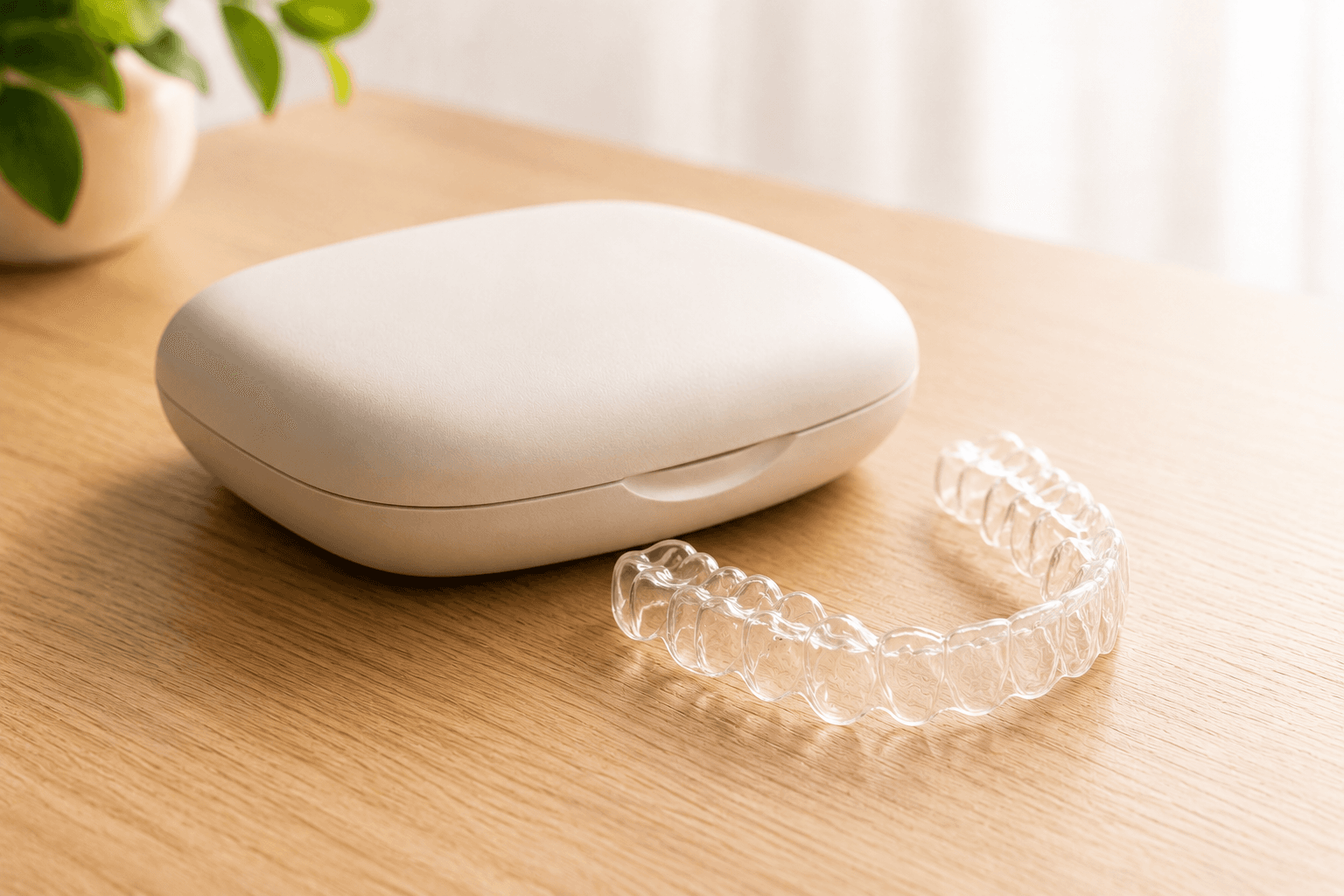
Invisalign is a brand of clear aligner, made by Align Technology. [7] Clear aligners are thin, clear, plastic-like trays custom-made to fit your mouth. Each set applies gentle pressure to move the teeth a little at a time, and you switch to the next set in the series as your orthodontist directs. [2]
Aligners are removable, and they need to be worn at least 22 hours a day to work. They come out to eat and drink and to brush and floss. [1][2]
When you receive your aligners, small attachments may also be bonded to your teeth. Read more on our Invisalign page.
Braces and Invisalign, side by side
Appearance. Aligners are designed to keep the appliance as inconspicuous as possible. With braces, the brackets and wires remain visible, though ceramic braces are less noticeable than metal. [1][6]
Eating. Aligners come out for meals, so there are no food restrictions. With braces, you need to avoid hard, sticky, crunchy and chewy foods, which can damage the brackets and wires. [1][4]
Cleaning. With braces, it takes extra care to keep the teeth, gums and braces free of plaque and food. With aligners, you brush and floss as usual with the trays out, and avoid drinking soft drinks, flavoured waters or sports drinks with the aligners in. [1]
Responsibility. Braces are fixed in place, so there is nothing to take out or put back in. Aligners only work when they are worn, so success depends on wearing them consistently, and because they are removable, they can be lost or damaged. [1]
The kinds of cases they suit. Most orthodontic problems can be treated with braces, including very bad bites. Aligners are effective for many issues, but suitability depends on the case: they may not work as predictably for severe bite problems, significant tooth rotations and large gaps. [1][3][4]
You can see how the two compare in our own words in the table on the Invisalign page.
Is Invisalign for teens, or only for adults?
Clear aligners are used by both teens and adults, and the AAO notes that their discreet look is valued by both. [3] Braces remain a common choice at every age, and orthodontic treatment isn't only for teens: teeth can be moved at any age. [6]
For a teen, the honest question is often about routine. Aligners give flexibility at mealtimes, but they only work if they are worn for most of the day, every day. Braces take that decision out of the patient's hands.
Learn more about treatment for kids and teens and for adults.
How long does treatment take?
It depends on the person and the problem being corrected, not just on the appliance. The Canadian Dental Association notes that most people wear braces for about two years, and that treating adults generally takes longer than treating children or teenagers. [6]
An estimated timeline for your own case is something your orthodontist can discuss with you at your consultation.
What happens after treatment?
Whichever option you choose, the work does not end when the braces come off or the last aligner is finished. Teeth have a natural tendency to shift back toward their original positions, so a retainer is used afterward to hold them in place. [5][6]
Questions to ask yourself before your consultation
- How important is it to me that the treatment is hard to see?
- Will I realistically wear aligners for 22 hours a day, every day?
- Would I rather not think about the appliance at all, and let it do its work?
- How do I feel about changing what I eat during treatment?
- For a teen: how well do they manage things they need to remember daily?
There are no wrong answers. They simply help you and your orthodontist find the option that fits your life.
The right choice starts with an examination
The AAO notes that the type of appliance matters far less than the skill of the orthodontist using it, and that an orthodontist is best qualified to decide whether braces or clear aligners suit you. [1][2] Clear aligner treatment also needs supervision by an orthodontist from start to finish. [3]
At Embrace Orthodontics Manitoba, we offer both braces and Invisalign. At your consultation, we look at your teeth and bite, talk through the options that would work for you, and explain which is best suited to your case, along with the cost and our interest-free monthly payment plans.
Wondering whether braces or Invisalign is right for you? Book a free consultation. No referral is needed.
This article is intended for general educational purposes and is not a substitute for an individual examination or professional medical or dental advice.
References
[1] American Association of Orthodontists. The choice depending on treatment goals and lifestyle; at least 22 hours a day of wear; food, cleaning and drinks with each option; aligners being lost or damaged; suitability of each; the orthodontist's skill. Accessed October 7, 2026.
[2] American Association of Orthodontists. How clear aligners work, wear time, removal to eat, drink, brush and floss, and the orthodontist being best qualified to choose. Accessed October 7, 2026.
[3] American Association of Orthodontists. Aligners valued by teens and adults, cases treated less predictably with aligners, and start-to-finish supervision by an orthodontist. Accessed October 7, 2026.
[4] American Association of Orthodontists. How braces work, metal and ceramic brackets, the range of problems braces treat, foods to avoid and adjustment visits. Accessed October 7, 2026.
[5] American Association of Orthodontists. Retainers after braces or aligners, and why teeth shift back. Accessed October 7, 2026.
[6] Canadian Dental Association. Ceramic braces, treatment at any age, about two years in braces for most people, longer for adults, and retainers. Accessed October 7, 2026.
[7] Align Technology. The maker of the Invisalign® System. Accessed October 7, 2026.