7 Signs Your Child May Need to See an Orthodontist
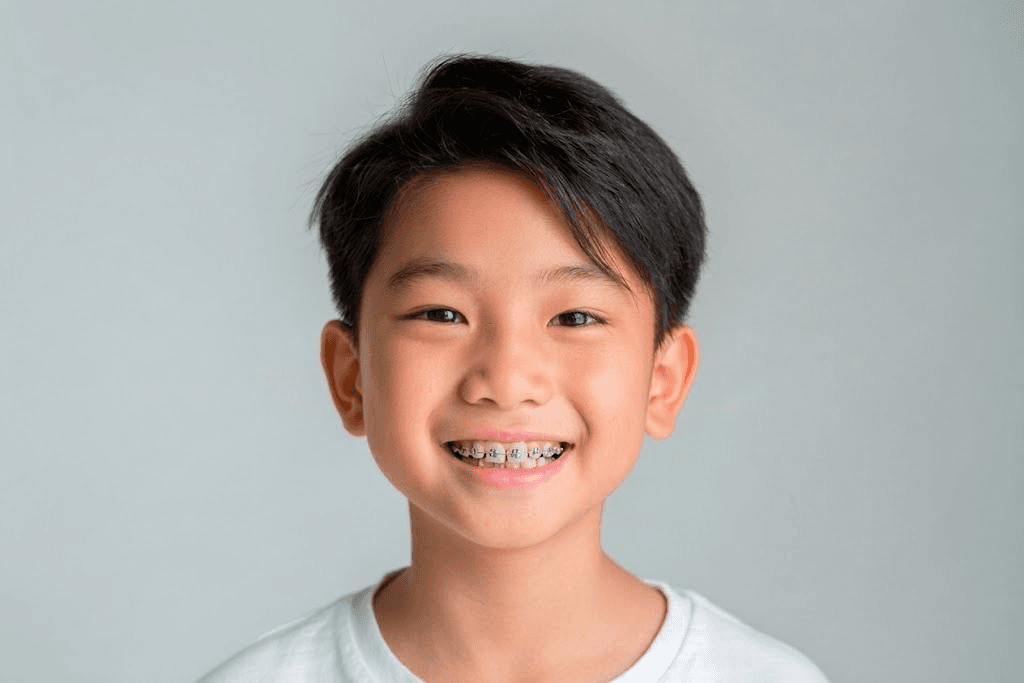
Does your child need to see an orthodontist? Sometimes the signs are obvious, such as crowded or crooked teeth. Other times, there may be a developing problem that isn't easy for parents to see.
The American Association of Orthodontists (AAO) recommends that children have their first orthodontic check-up no later than age 7. This does not mean your child needs braces at age 7. An early evaluation allows an orthodontist to monitor how the teeth and jaws are developing and determine whether treatment is needed now, later, or not at all. [1]
So, what should parents watch for? Here are seven signs that may indicate it's time for an orthodontic evaluation.
1. Crowded, overlapping, or misplaced teeth
One of the easiest signs for parents to notice is crowding.
You may see teeth overlapping one another, teeth coming in at unusual angles, or permanent teeth appearing to have insufficient space.
Crowding can occur when there isn't enough room for permanent teeth to erupt properly. An orthodontist can evaluate the developing teeth and jaws and determine whether monitoring or treatment may be appropriate. [2]
What parents may notice:
- Teeth overlapping each other
- Permanent teeth coming in behind or in front of other teeth
- Teeth appearing twisted or out of position
- Very little space between baby teeth
2. Your child's bite doesn't look right
A child's upper and lower teeth should come together in a way that allows comfortable biting and chewing.
An orthodontist can identify different types of bite problems, including:
- Overbite — the upper front teeth overlap the lower front teeth excessively.
- Underbite — the lower front teeth sit in front of the upper front teeth.
- Crossbite — some upper teeth bite inside the lower teeth.
- Open bite — some teeth don't meet when the mouth is closed.
Some bite problems can be identified while a child is still growing, which is one reason an early orthodontic evaluation can be helpful. [3][4]
3. Baby teeth are being lost too early or too late
Children normally begin losing baby teeth around ages 5–7, although there is normal variation.
If baby teeth are lost unusually early or remain much longer than expected, it may affect how permanent teeth develop and erupt.
An orthodontist can evaluate whether the timing of tooth loss is within the expected range and determine whether monitoring or treatment is appropriate. [2]
4. Your child has difficulty chewing or biting
Eating should not regularly be difficult or painful.
If your child has difficulty biting into food, chewing, or bringing the teeth together comfortably, it is worth discussing with a dental professional.
Difficulty chewing or biting is one of the signs the AAO identifies as a reason to consider an orthodontic evaluation. [2][5]
If your child is experiencing significant or persistent pain, don't assume that orthodontics is necessarily the cause. A dentist or other appropriate healthcare professional may need to evaluate the problem.
5. Your child's jaw shifts, clicks, or appears uneven
Pay attention to how your child's jaw moves when opening and closing their mouth.
You may notice:
- The lower jaw shifting to one side when your child bites down
- Clicking or popping sounds
- An unusual bite position
- Noticeable facial or jaw asymmetry
A shifting jaw can sometimes be associated with a bite problem, and an orthodontist can evaluate how the teeth and jaws are developing. [5]
Not every jaw sound means that orthodontic treatment is necessary, so an evaluation is important before drawing conclusions.
6. Your child frequently bites their cheeks
Occasional cheek biting can happen to anyone.
However, if your child frequently bites the inside of their cheeks while chewing, it may be worth having their bite evaluated.
The way the upper and lower teeth come together affects how the cheeks sit between the teeth during chewing. The AAO includes frequent cheek biting among signs that may indicate an orthodontic concern. [5]
7. Your child breathes through their mouth or has other unusual oral habits
Mouth breathing and certain oral habits can sometimes be associated with developing orthodontic problems.
The AAO identifies mouth breathing and prolonged thumb or finger sucking among signs that may warrant an orthodontic evaluation. [4][5]
If your child regularly breathes through their mouth, however, don't assume that orthodontic treatment is the solution. Mouth breathing can have several possible causes, so the appropriate healthcare professional should evaluate the underlying issue.
Does seeing an orthodontist mean my child needs braces?
No.
This is one of the most important things parents should know. An orthodontic check-up and starting orthodontic treatment are two different things.
After evaluating your child, an orthodontist may determine that:
- No treatment is needed at this time.
- Your child should be monitored as their teeth, jaws, and facial structures continue to develop.
- Early treatment may be appropriate for a developing orthodontic problem.
In other words, taking your child for an evaluation does not mean you are committing them to braces. [1][6]
Sometimes the best recommendation is simply: “Let's keep watching their development and check again later.”
When should you schedule an orthodontic check-up?
The AAO recommends that children have their first orthodontic check-up no later than age 7. But you don't have to wait until age 7 if you notice something that concerns you. [1][7]
If you notice significant crowding, an unusual bite, difficulty chewing, abnormal tooth eruption, or another concern, an orthodontic evaluation can help determine what is happening and whether anything needs to be done.
And if your child is already older than 7, it's not too late. The AAO notes that children older than 7 can still benefit from an orthodontic check-up. [8]
The goal isn't always early treatment
An early orthodontic visit is primarily about understanding your child's dental and jaw development.
Sometimes an orthodontist identifies a problem that benefits from early intervention. Other times, there is no immediate treatment needed, and the child can simply be monitored as they grow.
The important thing is knowing what is happening and when treatment, if any, would be most appropriate. [1][6]
Considering an orthodontic evaluation for your child?
If you've noticed one or more of these signs, an orthodontic consultation can help you understand your child's developing smile and bite.
At Embrace Orthodontics Manitoba, we welcome children, teens and adults who are interested in learning more about orthodontic treatment.
Book a free consultation and find out whether your child needs treatment now, later, or simply continued monitoring.
A note for parents
Every child develops differently. The signs above do not necessarily mean that your child needs orthodontic treatment. Only an appropriately qualified dental or orthodontic professional who evaluates your child can determine whether there is an orthodontic problem and what, if anything, should be done.
References
[1] American Association of Orthodontists. The age 7 check-up and the three possible outcomes of an early visit. Accessed September 24, 2026.
[2] American Association of Orthodontists. Crowding, baby teeth normally lost around ages 5–7, and discomfort chewing or biting. Accessed September 24, 2026.
[3] American Association of Orthodontists. Overbite, underbite and crossbite, and early treatment while a child is still growing. Accessed September 24, 2026.
[4] American Association of Orthodontists. Signs including open bite, mouth breathing and thumb or finger sucking past early childhood. Accessed September 24, 2026.
[5] American Association of Orthodontists. Signs including difficulty chewing, jaws shifting or clicking, cheek biting, mouth breathing and facial imbalance. Accessed September 24, 2026.
[6] American Association of Orthodontists. Observation visits to monitor development before any treatment. Accessed September 24, 2026.
[7] American Association of Orthodontists. Going earlier than age 7 when a problem is noticed. Accessed September 24, 2026.
[8] American Association of Orthodontists. “If your child is older than 7, it is not too late for a check-up.” Accessed September 24, 2026.